BBC Micro
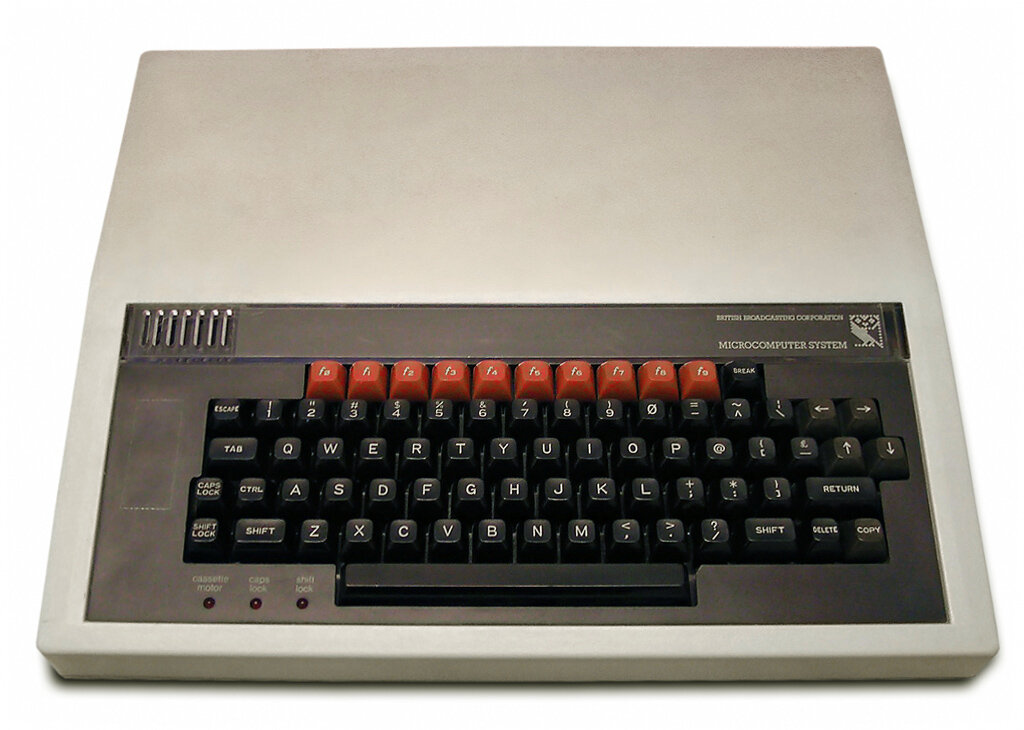
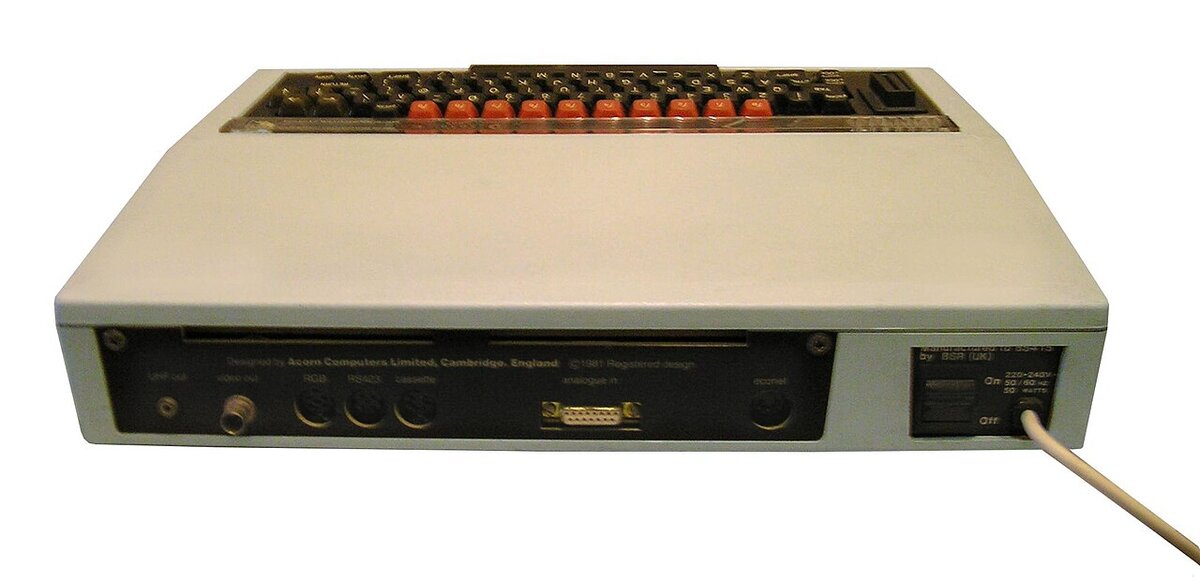
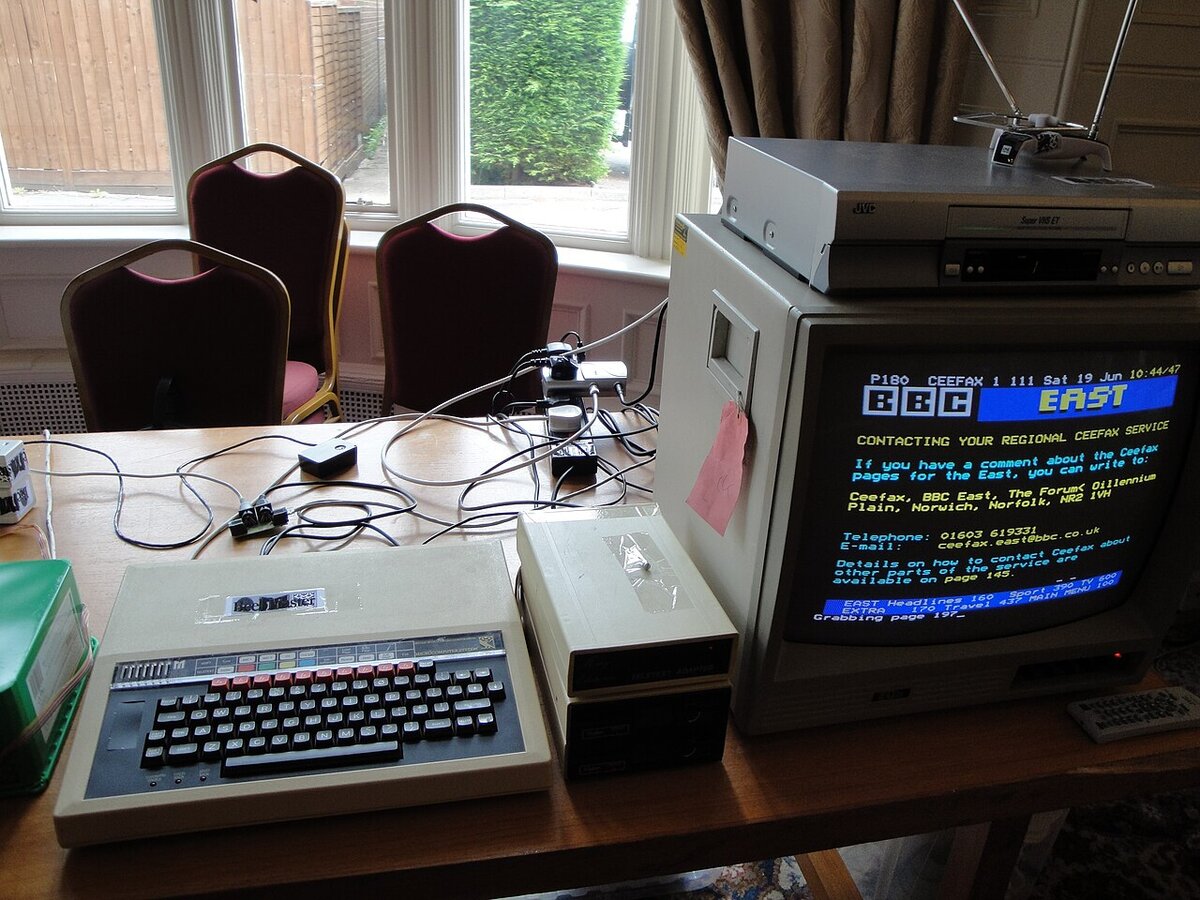
Photo 1: BBC_Micro.jpeg: Stuart Brady derivative work: Ubcule, public domain, via Wikimedia Commons (BBC Micro Front Restored.jpg) Photo 2: StuartBrady ., public domain, via Wikimedia Commons (BBC Micro rear.jpeg) Photo 3: Steve Elliott from UK, CC BY-SA 2.0, via Wikimedia Commons (BBC Micro Ceefax (4752596631).jpg)
Home computer, 1981, Acorn Computers. The BBC Micro was built by Acorn for the BBC Computer Literacy Project, and its Model B became the standard computer of British schools during the 1980s. It has a 6502 at 2 MHz, an excellent BBC BASIC with inline assembler, a teletext display mode, eight graphics modes, four-channel sound and a very rich set of interfaces, including the Tube for coprocessors and the 1 MHz bus. Over 1.5 million were sold and the machine was the platform on which Acorn later developed the ARM processor.
| Years | 1981 to 1986 |
|---|---|
| Processor | MOS 6502 at 2 MHz |
| RAM | 16 KB (Model A) or 32 KB (Model B) |
| ROM | 32 KB with Acorn MOS and BBC BASIC; sideways ROM sockets for more |
| Graphics | 8 modes, up to 640 x 256 in 2 colours, 160 x 256 in 8 colours, Mode 7 teletext |
| Sound | SN76489, 3 voices plus noise; speech option |
| Storage | cassette; 5.25" floppy drives with the disk interface |
| Ports | RS-423, parallel, user port, analogue joystick, Tube, 1 MHz bus, Econet, RGB, composite and RF video |
| Price (1981) | £335 for the Model B |
Documentation
No documents available yet for this model. Browse the documentation section.